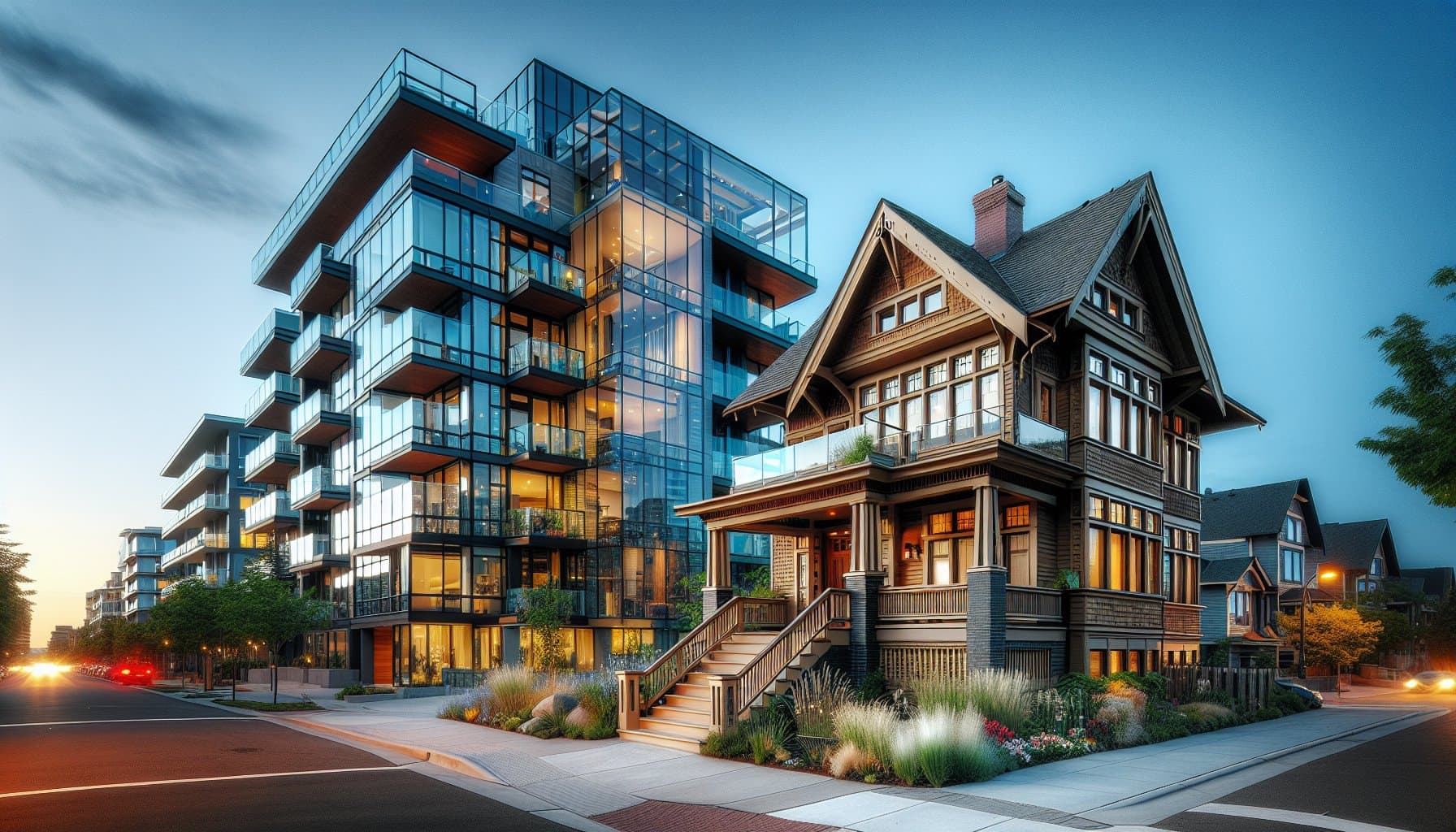
Austin Condos vs. Houses in 2026: Pros, Cons, and Real Costs
A condo can get you into a great location for less, but rising HOA dues, financing rules, and a crowded rental market change the math in 2026. Here's an honest side-by-side.

For most Austin buyers in 2026, a condo is the cheaper way into a great location, and a house is the safer long-term bet. Condos cost less upfront and save you time on maintenance. Houses cost more but give you space, control, and broader resale demand. The deciding factors this year are HOA dues, insurance, financing rules, and how much competition you'll face when you sell.
Those factors have shifted. Insurance costs have pushed HOA dues up in many buildings. Lenders are stricter about which condo projects qualify for conventional loans. And Austin's apartment glut has made it harder for condo owners who might want to rent their unit out later.
None of that makes condos a bad choice. It means you need to read the HOA documents as carefully as the listing.
Condos vs. houses at a glance
| Factor | Condo | Single-family house |
|---|---|---|
| Entry price | Lower; many central options in the $300Ks to $500Ks | Higher; City of Austin median around $571K in Sept 2026 |
| Monthly HOA | Often $300 to $1,000+, high-rises can run more | $0 to roughly $150 in many subdivisions |
| Insurance | HO-6 policy for your unit; master policy built into dues | Full homeowners policy, roughly $2,400 to $3,500 a year in Austin |
| Maintenance | Exterior and common areas handled by the HOA | All on you, plan for 1% to 2% of value a year |
| Financing | Building must meet lender project standards | Standard; fewer surprises |
| Special assessments | Possible for big repairs | You pay for repairs directly as they come |
| Resale | More inventory competition, smaller buyer pool | Broader buyer pool, especially families |
| Renting it out | HOA rental caps and STR rules may limit you | Fewer restrictions, but HOA and city rules still apply |
| Best for | Walkability, lock-and-leave, first-time buyers | Space, yard, families, long-term holds |
Price ranges are rough and move with the market. The City of Austin median comes from the Unlock MLS September 2026 report. Insurance ranges are estimates and depend heavily on the home, the carrier, and the deductible.
The case for condos
Condos still solve real problems.
- Location for less. A condo can put you near downtown, South Lamar, East Austin, or the Domain at a price where a house would be out of reach. See our condos and townhomes page for current options.
- Less upkeep. The HOA handles roofs, exteriors, landscaping, and common areas. That matters if you travel or don't want weekends spent on yard work.
- Amenities. Pools, gyms, and secured parking are common, especially in newer buildings.
- More negotiating power right now. Condo inventory has been high in 2026, and well-located units are selling for less than at their peak. Buyers often have room to ask for price cuts or closing cost help.
The 2026 condo reality check
HOA dues and insurance
The biggest change in the last few years is the cost of insuring buildings. Texas homeowners insurance premiums have climbed from under $2,000 on average in 2020 to more than $3,500 in 2026, and condo master policies have followed the same trend. When the HOA's insurance bill goes up, your dues go up.
Before you write an offer, ask for:
- The current HOA budget and the last two years of budgets, so you can see how fast dues are rising.
- The reserve study and the current reserve balance. Underfunded reserves often lead to special assessments.
- Recent board meeting minutes. These show upcoming repairs, insurance renewals, and disputes.
- The master insurance policy summary, including the deductible. A high deductible may be passed to owners after a claim.
The Texas Department of Insurance home insurance guide explains how HO-6 policies and deductibles work.
Financing and warrantability
Most buyers use a conventional loan, and that means the building has to meet Fannie Mae or Freddie Mac project standards. Buildings that don't are called non-warrantable. Under Fannie Mae's Selling Guide, common reasons a project is ineligible include:
- Pending litigation about the building's safety, structure, or habitability
- Critical repairs or significant deferred maintenance
- One entity owning more than 20% of units in larger buildings
- Commercial space over 35% of the project
- Hotel-style operations or mandatory rental pools
Lenders also review reserves, owner-occupancy, and dues delinquencies. If a building is non-warrantable, you may still find a portfolio loan, but expect a larger down payment and a higher rate. That also shrinks your future buyer pool, which hurts resale.
If you plan to use an FHA loan, check whether the building is on HUD's FHA-approved condo list. Our financing guide covers loan types in more detail. Talk to your lender early, before you fall for a specific unit.
The rental glut and condo resale
Austin has added roughly 97,000 new apartment units since 2020. Apartment vacancy peaked near 15.8% in 2024 and was still around 12% in mid-2026, with concessions offered on about a third of units. Effective rents were down roughly 4% year over year.
That matters for condos in two ways. First, if you planned to rent out your condo later, you're competing with new apartments that offer free months and amenities. Second, fewer investors are buying condos, which shrinks demand when you sell. Downtown and high-end units have felt this most. If you're weighing a condo purely as an investment, our Austin rental property investing guide walks through the numbers investors are running right now.
The fix is to buy a condo you'd be happy to live in for at least five to seven years. Check the HOA's rental rules too. Many buildings cap leasing, and short-term rentals are heavily restricted by many HOAs and the City of Austin.
The case for houses
Single-family homes have their own costs, but fewer unknowns.
- Space and control. You get a yard, room for a home office, and the freedom to renovate.
- Broader resale demand. Families, relocating buyers, and investors all compete for houses. That generally supports resale even in a slow market.
- Simpler financing. No project approval, no HOA document review for the lender.
- Long-term flexibility. Under Austin's HOME Initiative, many single-family lots can now hold up to three units, which can open options like adding a second unit later. Rules and costs vary, so talk to the city and a builder first.
The tradeoffs are real too. You pay for every repair. Insurance is fully on you, and insurers are now pricing wildfire risk in parts of Travis, Hays, and Williamson counties. Property taxes are higher on a pricier home, though the homestead exemption helps.
How to decide
Ask yourself these questions:
- How long will you stay? Under five years favors renting or a well-priced condo. Longer horizons favor a house. Our rent vs. buy calculator can help.
- What's the full monthly cost? Add mortgage, taxes, insurance, and HOA dues for each option. Use our mortgage calculator to compare.
- How much maintenance do you want? Be honest about your time and skills.
- Can the building be financed? Ask your lender to check before you write an offer.
- Do you need flexibility to rent it out? Check HOA leasing rules and current rents.
Our take
If you're buying for the first time, our first-time buyer guide walks through the process.
Talk to our team
We'll help you compare specific condos and houses side by side, including HOA documents, insurance quotes, and financing. Reach out to our team and tell us what you're weighing.
Frequently Asked Questions
Found this helpful?
Share this article with someone who's considering Austin real estate.